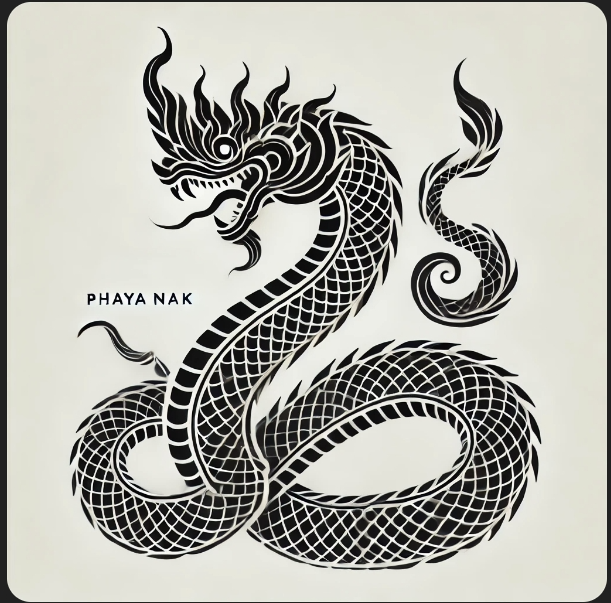
 Naga · Level 1· Serpent Deity
Long before there were ropes, gloves, or rounds, there was the battlefield. Muay Thai did not begin as a sport. It began as what a soldier did when the sword was gone and the enemy was still standing — and to understand the art you practice now, you have to walk back to that field.
The Art the Records Forgot
Tradition holds that Muay Thai descends from the battlefield arts of old Siam, sharpened over centuries of war with neighboring kingdoms. A fighter who lost his weapon still had eight of them left: two fists, two elbows, two knees, two shins.
But be honest about the history. Much of the earliest record is simply gone. When Ayutthaya, the old Siamese capital, fell and burned in 1767, most of the written history burned with it. What survives comes down to us as tradition — carried from kru to student far more than from any archive. So hold the dates lightly and the lineage seriously: the exact century is a matter of telling, but the inheritance is real.
"ancient boxing" — the ancestor arts
The older, pre-ring forms are remembered together as muay boran — ancient boxing. Out of them, the old masters distilled a set of guiding principles.
the "mother techniques" — master principles
Tradition calls these the mae mai, the "mother techniques" — the root movements every later technique grows from. (Trainers may name and group these differently; we treat the term as the doorway, not the final word.)
The Spirit in the Violence
Here is the part outsiders miss: Muay Thai was never only physical. A fighter walking toward war walked armored in spirit as much as in skill. Cloth blessed by monks was bound around the head. Prayers were spoken over him. And, for many, sacred tattoos were etched into the skin.
The sak yant — the sacred tattoos applied by monks or masters — are held by many practitioners to carry protection and power into a fight. Beliefs and practices around them vary widely, and they are living tradition, not museum pieces. We name them here with respect and leave the details to those who carry them.
This is what people mean when they call Muay Thai a violent spirituality: the ring and the shrine are not opposites. The blessings, the tattoos, the headband a fighter still wears today — all of it says the same thing. You do not fight alone, and you do not fight only with your body.
The story every Thai child knows is that of a captured Siamese boxer who won his freedom with his hands before an enemy court. It is told as legend more than as record — the dates and details come down as tradition — but its meaning is exact: the art was a fighter's dignity, carried even into captivity. You will meet him again, by name, in the History module.
From the Field to the Ring
Over generations, the battlefield art became a contest, then a sport — rings replaced open ground, rounds replaced fights-to-the-finish, gloves replaced rope-bound fists. What changed was the setting. What stayed was the soul: respect for the teacher, blessing before the fight, and the whole body as one weapon.
What This Means for You
When you step onto the mats, you are practicing something that was once a matter of survival, kept alive across centuries because it was worth keeping. The History module will give you the names and the dates. This module gives you the why beneath them — and the why is where the art actually lives.